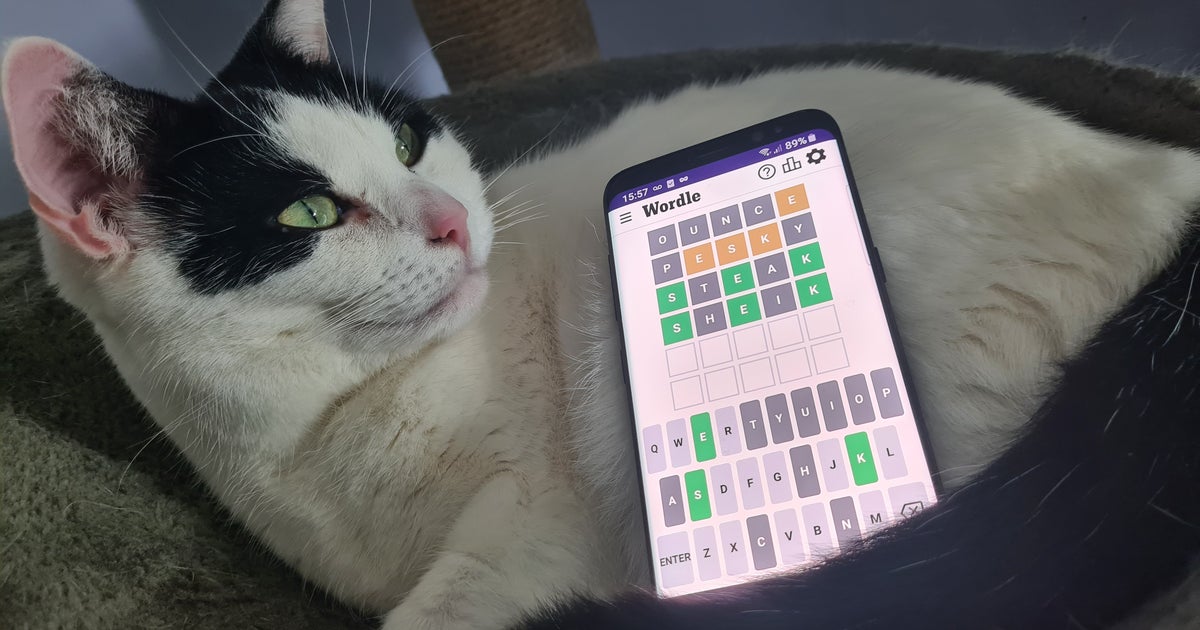
Unlock Your Wordle Win Streak: Master Optimal Starters & Smart Strategies
For millions worldwide, the daily Wordle puzzle has become a beloved ritual. The thrill of cracking the five-letter word in just a few guesses, especially maintaining an impressive win streak, is incredibly satisfying. But what separates the casual player from the consistent winner? Often, it comes down to a strategic approach, beginning with optimal starting words and evolving with smart, logical deductions. If you're seeking to elevate your game and are looking for robust wordle #1722 help, or assistance with any daily puzzle, you've come to the right place. This comprehensive guide will delve into proven methods and expert insights to help you conquer Wordle almost every time.
The Power of a Multi-Word Opening: Covering the Alphabet
One highly effective strategy, championed by seasoned Wordle players, involves deploying a carefully selected set of words in your initial guesses. The aim isn't to guess the word immediately, but to gather as much information as possible about common letters, their presence, and their absence. This method strategically maximizes your information gain early on, drastically narrowing down the possibilities.
A particularly robust approach suggests using four specific words, designed to cover a broad spectrum of common letters without any overlap. These words are:
- FAKES
- GLORY
- CHIMP
- BUNDT
Let's break down why this combination is so potent. Together, these twenty unique letters efficiently introduce all five main vowels (A, E, I, O, U) and a significant number of high-frequency consonants (S, L, R, Y, C, H, M, P, B, N, D, T, F, G, K). By using these words, you quickly eliminate many letters from consideration and pinpoint others that are definitely in the word, often revealing their positions. This systematic letter coverage sets a strong foundation for your subsequent guesses. As one Reddit user noted, adopting this strategy led to an impressive 110+ win streak, with most puzzles solved in mere seconds.
While this multi-word opening is incredibly powerful, the subsequent two guesses are where your logical deduction truly shines. You'll need to synthesize the green and yellow indicators to identify potential letter repetitions, deduce precise placements, and consider any remaining high-frequency letters not yet tested. A strong focus on vowel repetition and placement is particularly key at this stage. By methodically working through the possibilities, you transform a seemingly complex puzzle into a manageable challenge. For a deeper dive into this specific method, explore our detailed guide: Master Wordle Daily: The Proven 4-Word Starting Strategy.
Debating the "Best" Single Starter: Information vs. Greens
Beyond the multi-word approach, many players obsess over finding the single "best" starting word. This quest often leads to a fascinating discussion around different analytical metrics used to rank words. It's important to note that most of these analyses are based on the official New York Times Wordle word list (which has approximately 2309 possible answers out of ~12974 guessable words).
First, it's worth addressing the common concern about maintaining a streak. Interestingly, if you play optimally, almost any word can guarantee a win 100% of the time, even in hard mode. Even a word considered statistically "worst," like QAJAQ, can lead to a win if subsequent guesses are made intelligently. The exceptions are rare and often involve very specific letter patterns (like words ending in `_IGHT`) where too many possibilities remain with limited unique letters. This highlights that while your starter matters, your ongoing strategy is paramount for streak integrity.
Measuring a Starter's Efficacy: Two Key Metrics
The debate largely revolves around two primary metrics for evaluating starting words:
-
Average Greens: This straightforward metric measures how many green letters a word gets on average across all possible Wordle answers. A higher average green count means you're more likely to hit correctly placed letters from your very first guess.
Top words by average greens (across all guessable words):
- saree (0.680814)
- sooey (0.679515)
- soree (0.669987)
- saine (0.666522)
- soare (0.65916)
Top words by average greens (on the answer list only):
- slate (0.620182)
- sauce (0.608922)
- slice (0.607622)
- shale (0.60589)
- saute (0.604158)
While getting greens feels good, this metric doesn't tell the whole story. Yellows (correct letter, wrong position) and even grays (letter not in the word) provide crucial information that average greens might overlook.
-
Information Theory (or Average Remaining Possibilities): This more sophisticated metric, famously explored by mathematician 3blue1brown, focuses on maximizing the amount of information gained from a guess, regardless of whether it results in a green, yellow, or gray. It quantifies how much a guess narrows down the total number of possible remaining answers, expressed in "bits" of information. A word with a high information theory score effectively prunes the solution tree the most, on average.
Top words by information theory (across all guessable words):
- soare (5.8852)
- roate (5.88486)
- raise (5.8783)
- reast (5.86774)
- raile (5.86515)
Top words by information theory (on the answer list only):
- raise (5.8783)
- slate (5.85582)
- crate (5.83522)
- irate (5.8328)
- trace (5.83043)
The related metric, "average remaining possibilities," is more intuitive: it simply measures the average number of potential answers left after your first guess. Both information theory and average remaining possibilities prioritize words that give you the most 'bang for your buck' in terms of eliminating options quickly.
For players aiming for the fewest possible guesses, information theory generally provides a more strategic advantage. It helps you reduce the solution space most efficiently. For a deeper comparative look into these starter word philosophies, check out our article: Best Wordle Starters: Information Theory vs. Average Greens.
Beyond the First Word: Smart Strategies for Mid-Game Success
While an optimal starter is crucial for any wordle #1722 help strategy, true mastery lies in your ability to analyze the feedback from your guesses and adapt. Here are key strategies to employ after your initial word(s):
- Focus on Vowels: Vowels (A, E, I, O, U) are present in almost every English word. After your first guess, prioritize determining which vowels are present and, crucially, if any repeat or are in common vowel pairs (like AI, OU, EA).
- Leverage Consonant Frequency: English has highly frequent consonants such as R, S, T, L, N. If these haven't been adequately tested by your starter, consider them for your second or third guesses.
- Pay Attention to Position: Green letters are fixed, but yellow letters are just as informative. A yellow 'S' tells you 'S' is in the word, but not in that position. Use this to systematically test 'S' in other spots. Crucially, a gray letter is permanently eliminated from all positions.
- Embrace Repetition: Don't forget that letters can repeat! Words like "APPLE," "SENSE," "REFER" are common. If you have few confirmed letters after a couple of guesses, or if a letter has strong positional clues, consider repeating it.
- Strategic Second/Third Guesses: If your first word didn't hit many common letters, your second word should be designed to cover as many of the remaining high-frequency letters as possible. For example, if your first word was "CRANE" and you got no greens or yellows, your next word could be "SLIMY" to introduce entirely new, common letters.
- Hard Mode Considerations: In hard mode, you *must* use any revealed green or yellow letters in subsequent guesses. This means you can't just throw out a "testing" word with all new letters if you have existing clues. This forces more deliberate, puzzle-specific guesses.
- Practice with the Archive: The Wordle Archive (created by an enthusiast) is an invaluable tool for practice. You can replay past Wordles to test different strategies without impacting your live streak. This builds intuition and pattern recognition.
Conclusion
Whether you prefer the comprehensive coverage of a multi-word opening like FAKES, GLORY, CHIMP, BUNDT, or the data-driven precision of a single information-rich starter like SOARE or RAISE, consistent Wordle success hinges on a combination of strategic planning and agile deduction. There's no single "magic bullet" answer for every puzzle, but by understanding the underlying principles of letter frequency, information gain, and logical elimination, you can dramatically improve your performance. Remember, every guess, whether green, yellow, or gray, provides valuable data. Master the art of interpreting these clues, and your Wordle win streak will surely thrive. Keep practicing, stay analytical, and enjoy the daily challenge!