Master Wordle Daily: The Proven 4-Word Starting Strategy
For countless players worldwide, the daily Wordle challenge is a delightful mental workout. But for those aiming for an unbroken winning streak, or simply seeking consistent success, a robust strategy is key. Forget the endless debates over a single "best" starting word; the real secret to consistently cracking the puzzle lies in comprehensive information gathering right from the outset. If you're looking for reliable wordle #1722 help, or assistance with any daily challenge, this proven 4-word starting strategy is your ultimate game-changer. It’s designed to maximize your chances of success, turning those head-scratching moments into satisfying victories.
Why a Multi-Word Strategy? The Power of Early Information Gathering
The quest for the "best" Wordle starting word often leads to intricate analyses of letter frequency, average greens, or information theory. While fascinating, these metrics usually focus on optimizing a single guess. Words like SOARE, RAISE, or SLATE are indeed statistically powerful for their initial information yield. However, even the most optimal single word leaves a significant portion of the alphabet unexplored.
The limitation of a one-word approach is that it relies heavily on the *luck* of your first guess aligning well with the answer. What if your "perfect" starter only reveals a single yellow, or worse, all grays? You're left with minimal information and a wide field of possibilities for your subsequent guesses. This is precisely where a multi-word strategy offers a distinct advantage. Instead of hoping for a lucky hit, we proactively gather a broad spectrum of information, systematically eliminating letters and narrowing down the possibilities with unparalleled efficiency. This method shifts the game from a gamble to a calculated deduction, significantly boosting your chances of a quick solve.
Unveiling the "No Overlap" 4-Word Wordle Strategy
The core principle behind this highly effective strategy is simple yet brilliant: select a set of starting words that collectively cover the most common letters in the English language, particularly vowels and high-frequency consonants, with absolutely no overlap between the letters used in each word. This ensures every guess provides fresh, non-redundant information.
The four words that form the bedrock of this strategy are:
*
FAKES
*
GLORY
*
CHIMP
*
BUNDT
Let's break down the sheer power of this combination. By using these four words, you collectively test 20 unique letters, covering nearly the entire alphabet. This includes all five traditional vowels (A, E, I, O, U) and 15 crucial consonants.
Consider the coverage:
- FAKES: F, A, K, E, S
- GLORY: G, L, O, R, Y
- CHIMP: C, H, I, M, P
- BUNDT: B, U, N, D, T
This strategic selection ensures that within four guesses, you've likely identified a significant number of correct letters (greens), several letters in the wrong spot (yellows), and, critically, ruled out a vast majority of the alphabet (grays). This systematic elimination of possibilities dramatically reduces the search space for the solution. The strength of this strategy lies not just in finding correct letters, but in gaining powerful negative information by identifying which letters are *not* in the word.
How to Execute This 4-Word Wordle Strategy
The beauty of this strategy is its flexibility. You can use these four words in any order you choose. However, a common approach is to play them sequentially: FAKES, then GLORY, then CHIMP, then BUNDT.
Here’s how to interpret and act on the results:
1.
Observe Carefully After Each Guess: After playing each word, meticulously note every green, yellow, and gray tile. The gray tiles are as important as the colored ones, as they tell you which letters are definitively out of the puzzle.
2.
Adapt Your Approach: While the strategy is designed for four words, you might not always need them all. If, for instance, your first or second word yields three or more greens, you might already have enough information to solve the puzzle in fewer than six guesses. In such cases, pivot to deducing the answer using your current information rather than strictly adhering to all four starters.
3.
Prioritize Vowels and Repetition: As the strategy suggests, the final two guesses (or fewer, if you're on a roll!) will require logical thinking. A key area to focus on is vowel repetition and placement. English words often feature repeated vowels (e.g., EERIE, CANOE), and their positions are critical. Similarly, high-frequency consonants like 'S', 'E', 'A', 'R', 'O', 'I', 'L', 'T', 'N' often repeat, so keep an eye out for this possibility.
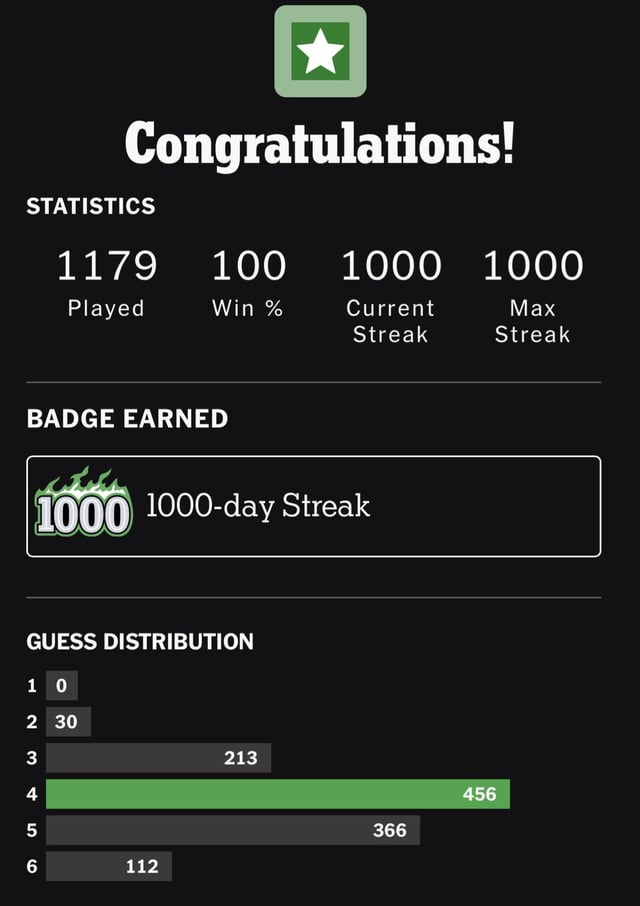
This approach transitions from information gathering to focused deduction. You'll move from broad coverage to pinpoint accuracy, often solving the Wordle in 4 or 5 guesses, well within the 6-guess limit. This method has been tried and tested, proving to be incredibly robust. While theoretical failures are always possible, its success rate in practice, as demonstrated by streaks well over 100 days in the Wordle archive, speaks volumes about its reliability.
Beyond the First Four: Deductive Reasoning for the Win
Once you’ve played your initial set of words (or fewer, if you’ve hit gold early), the game shifts from brute-force information gathering to a refined process of elimination and deduction. This is where your logical thinking truly comes into play to secure the win, perhaps even helping you with wordle #1722 help.
1.
Integrate All Information: Combine all the green, yellow, and gray letter information you've accumulated. Create a mental (or physical, if you prefer) template of the word, placing greens in their fixed positions and noting yellows as letters that are present but not in that specific slot. All gray letters are completely out.
2.
Identify Repeating Letters: After four words, you'll have a strong sense of the available letters. If a common letter like 'E', 'S', 'A', 'O', or 'L' is present in the word (yellow or green), always consider if it might appear a second time. Many Wordle answers feature double letters, and overlooking this possibility can be a common pitfall.
3.
Consider Letter Placement and Word Structure: With your known letters, start brainstorming possible words. Think about common English word patterns. If you have '_A_ _E', for instance, words like "CRANE," "SLATE," or "TRACE" come to mind. If you have two vowels and a consonant, consider how they typically combine.
4.
Strategic "Information-Seeking" Guesses: If you're down to two or three possible words (e.g., CRANE, CRAVE, BRACE) and you have guesses remaining, don't just pick one at random. Choose a word that introduces new, high-frequency letters *not yet confirmed as gray* to further narrow down the options. For example, if you're deciding between "CRANE" and "CRAVE," and you haven't tested 'V', guessing a word with 'V' could quickly resolve the ambiguity. This principle is deeply rooted in information theory, where each guess is optimized to reduce the average number of remaining possibilities. For more on optimizing your starters and understanding the nuances of information theory, you might find
Best Wordle Starters: Information Theory vs. Average Greens to be a valuable read.
Elevating Your Game: Advanced Wordle Insights and Avoiding Pitfalls
While this 4-word strategy offers a robust foundation, a few advanced insights can further sharpen your Wordle skills and safeguard your winning streak.
*
Understanding Word Lists: As insightful analyses confirm, the official New York Times Wordle uses a specific list of ~12,974 guessable words, but a much smaller list of ~2,309 actual answer words. This distinction is crucial. Your goal is to find an answer word from the smaller list. While our strategy broadly covers the alphabet, being aware of common answer patterns can give you an edge in the deduction phase.
*
Hard Mode Adaptation: If you play in Wordle's Hard Mode, you are required to use all revealed green and yellow letters in subsequent guesses. This strategy provides an excellent starting point for Hard Mode as it quickly furnishes you with a wealth of confirmed letters. Your subsequent deductive guesses will naturally incorporate these constraints, leading to a more streamlined path to the solution.
*
Beyond the "Best" Starter Debate: While single "best" words like CRANE or SOARE perform well on average according to metrics like information theory, their aim is to reduce possibilities with *one* guess. Our 4-word strategy has a different objective: to guarantee comprehensive initial coverage across *multiple* guesses, ensuring you have the maximum possible information to work with regardless of how "lucky" your first word is. This provides a safety net for your win streak. To delve deeper into protecting your streaks and optimal strategies, check out
Wordle Win Streak: Uncover Optimal Starters & Smart Strategies.
*
Practice with the Wordle Archive: The Wordle Archive, a repository of all past puzzles, is an invaluable tool for practice. Test this 4-word strategy there, and you'll quickly see its consistent effectiveness. You can revisit old puzzles and hone your deductive skills without impacting your current streak.
Conclusion
The daily Wordle challenge doesn't have to be a guessing game. By adopting the proven 4-word starting strategy – FAKES, GLORY, CHIMP, BUNDT – you equip yourself with an unparalleled method for systematic information gathering. This approach significantly reduces uncertainty, transforming each puzzle into a logical exercise rather than a test of luck. Whether you're aiming for a flawless streak or simply seeking to conquer the day's challenge, like wordle #1722, this strategy provides the consistent help you need. Embrace this robust system, hone your deductive skills, and watch your Wordle success soar. Happy puzzling!